أرفف تخزين المنتجات الدوائية في مصر
أرفف تخزين المنتجات الدوائية في مصر: دليل عملي لتخزين آمن وقابل للتتبع ونظيف
تخزين المنتجات الدوائية ليس مجرد "مساحة أكبر". بل يتعلق بحماية جودة المنتجات، وضبط تواريخ الصلاحية بدقة، وتسريع عمليات الالتقاط اليومية دون المخاطرة بحدوث أي خلط أو أخطاء.
يشرح هذا الدليل تحديات التخزين التي تواجه فرق العمل في القطاع الدوائي داخل مصر، وكيفية تخطيط أنظمة الأرفف والتوزيعات الداخلية بحيث تظل نظيفة ومنظمة وقابلة للتوسع.
جدول المحتويات
- ما الذي يجعل تخزين المنتجات الدوائية مختلفا؟
- التحديات الأساسية: متطلبات درجات الحرارة، قابلية التتبع، النظافة، السعة التخزينية، الأمان
- أنظمة الأرفف وأنظمة التخزين المعدنية التي تناسب عمليات القطاع الدوائي
- عملية تصميم عملية (خطوات يمكنك اتباعها)
- قوائم تحقق مختصرة: جولة ميدانية بالموقع ومتطلبات طلب عرض السعر
- دور لينك مصر: تخطيطات مرنة، أنظمة معيارية، ودعم متكامل
- الأسئلة الشائعة
ما الذي يجعل تخزين المنتجات الدوائية مختلفا؟
عادة ما يتطلب تخزين المنتجات الدوائية رقابة أكثر صرامة من التخزين العام، لأنك توازن بين عدة أولويات في الوقت نفسه:
- سلامة المنتج: الحفاظ على المنتجات ضمن نطاق درجة الحرارة المناسب، سواء كانت في درجة حرارة عادية، أو مبردة، أو ضمن مناطق محددة.
- قابلية التتبع: التحكم في الدُفعات وأرقام التشغيل وإدارة تواريخ الصلاحية، وغالبا باستخدام مبدأ FEFO أي الأقدم انتهاءً يخرج أولا.
- النظافة: أسطح سهلة التنظيف، ومناطق منظمة، وتقليل أماكن تجمع الغبار.
- سرعة التشغيل: التقاط سريع للمنتجات مع عدد كبير من الأصناف، مع تقليل الأخطاء إلى الحد الأدنى.
- التحكم في الوصول: مناطق مقيّدة للعناصر الخاضعة للرقابة أو المنتجات عالية القيمة.
ولهذا السبب ينتهي الأمر بالعديد من المنشآت الدوائية إلى الحاجة تخطيطات تخزين مخصصة بدلا من استخدام أرفف قياسية في كل مكان.
التحديات الأساسية التي تواجه فرق العمل في القطاع الدوائي وما يجب أن تعالجه أنظمة التخزين
بناء على طبيعة عمليات القطاع الدوائي المعتادة مثل التصنيع والتوزيع والمستشفيات والصيدليات، غالبا ما يتركز تخطيط التخزين على معالجة هذه المشكلات المتكررة:
1) متطلبات درجات الحرارة (درجة حرارة عادية مقابل التخزين المبرد
بعض خطوط المنتجات تتطلب مناطق تبريد، بينما تبقى أخرى في درجة حرارة عادية. يجب أن يدعم تخطيط الأرفف تقسيم المناطق بوضوح، وتدفق الهواء الجيد، ومسارات حركة بسيطة حتى لا تضطر الفرق إلى إبقاء الأبواب مفتوحة لفترة أطول من اللازم.
2) مستوى عالٍ من قابلية التتبع والتحكم في تواريخ الصلاحية
تصبح متابعة تواريخ الصلاحية أكثر صعوبة مع زيادة عدد الأصناف. يساعد التصميم الذكي للأرفف من خلال فصل مجموعات المنتجات، وتنظيم مسارات الالتقاط، ودعم أنظمة الباركود أو رموز QR.
3) الحفاظ على بيئة معقمة ونظيفة
حتى خارج غرف التعقيم، تحتاج المناطق الدوائية إلى أنظمة تخزين مرتبة وسهلة التنظيف تتجنب الفوضى و"الصناديق المجهولة". يساعد النظام المناسب على تقليل نقاط تراكم الغبار ويجعل إجراءات التنظيف أبسط وأكثر انتظاما.
4) تخزين مجموعة واسعة من المنتجات (كثافة عالية من الأصناف)
غالبا ما تقوم المراكز الطبية والمستشفيات والصيدليات بتخزين عدد كبير من خطوط المنتجات. تساعد أرفف القطع الصغيرة، والأدراج، والصناديق، والمواقع المعلّمة بوضوح على تقليل أخطاء الالتقاط وتقليص الوقت المستغرق في البحث.
5) سعة تخزينية عالية في مساحة محدودة
When floor space is tight, you win by improving vertical usage وتقليل المساحات المهدرة في الممرات دون التأثير على سهولة الوصول أو معايير السلامة.
6) Security restricted storage
Some categories need controlled access. Storage can support this with lockable sections, controlled aisles, and systems that add security features as part of the layout.
أنظمة الأرفف وأنظمة التخزين المعدنية التي تناسب عمليات القطاع الدوائي
There’s no single “best system.” The right choice depends on SKU profile, picking style, temperature zoning, and growth rate. Here are the most common fits:
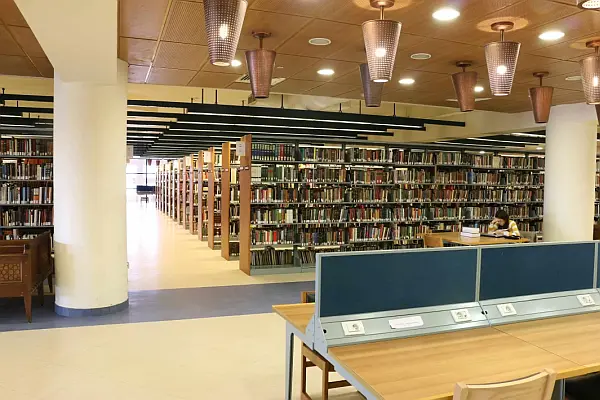
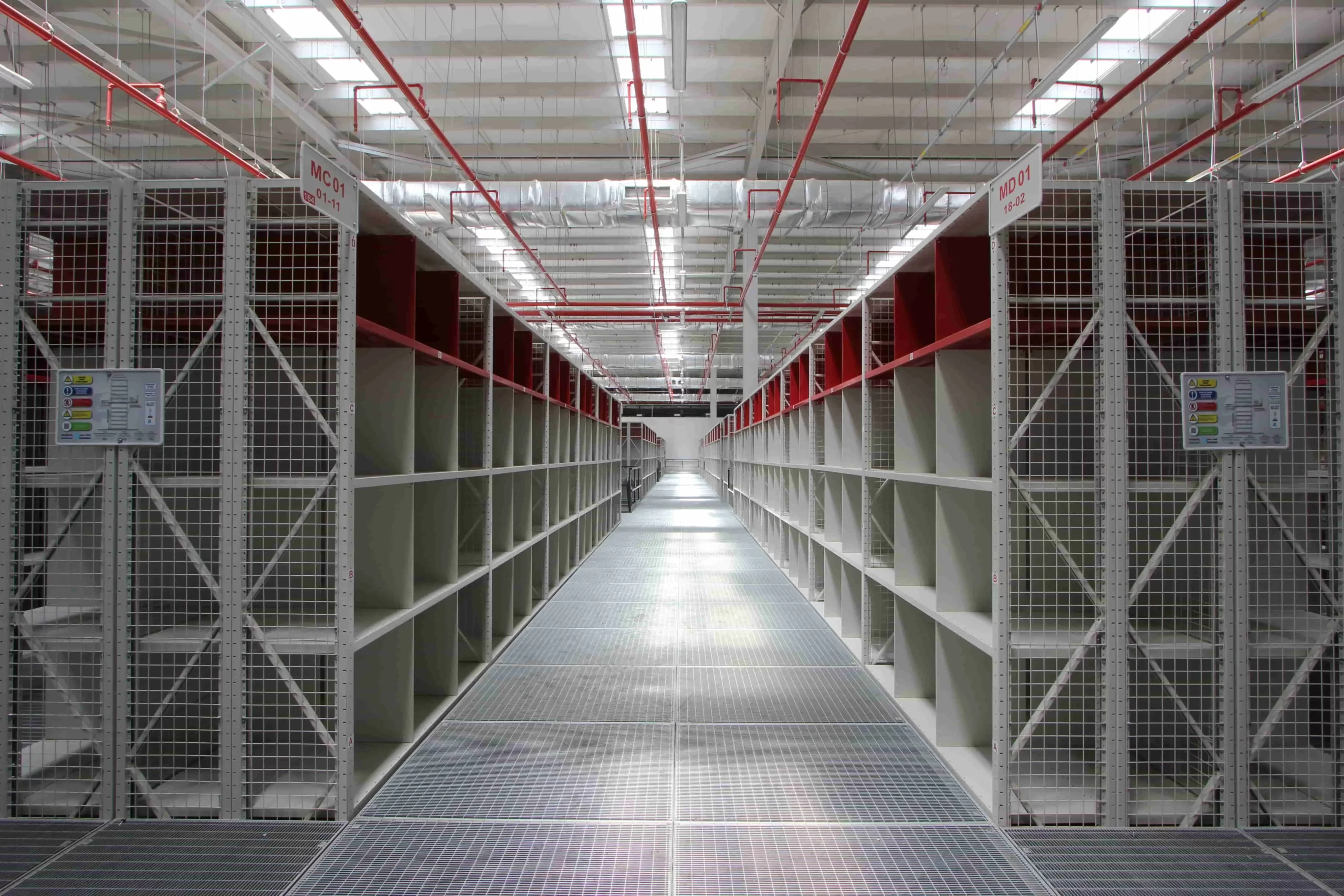
Traditional shelving (static)
Best for straightforward access, daily picking, and stable layouts. Works well for pharmacies, medical supplies, and backroom storage—especially when combined with bins and dividers for small items.
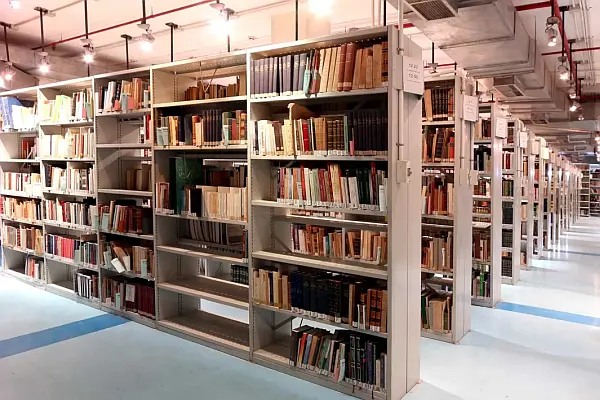
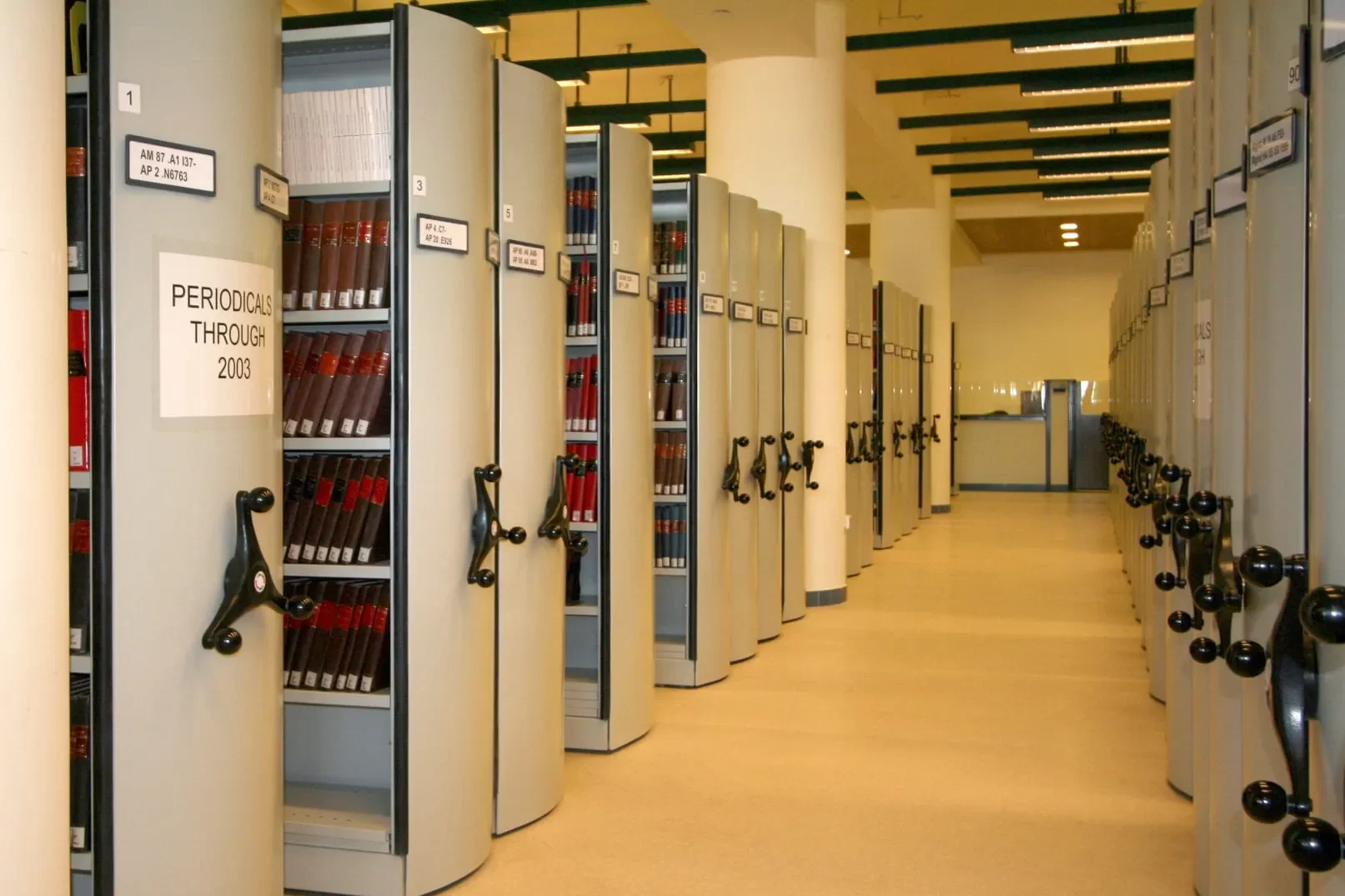
Mobile shelving (compact storage)
Useful when you need high density and added control over access (because aisles can be managed). It’s often chosen when space is expensive or expansion isn’t easy, while still keeping stock organized and reachable.
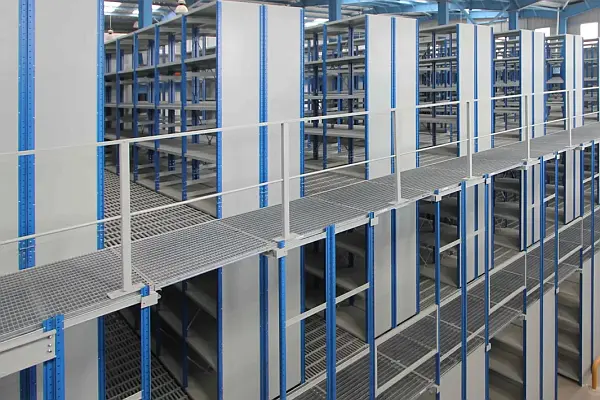
Multi-tier solutions (use vertical space for picking)
If you have height and many cartons/boxes, multi-tier configurations can create multiple picking levels with walkways—helping you scale capacity without expanding the footprint.
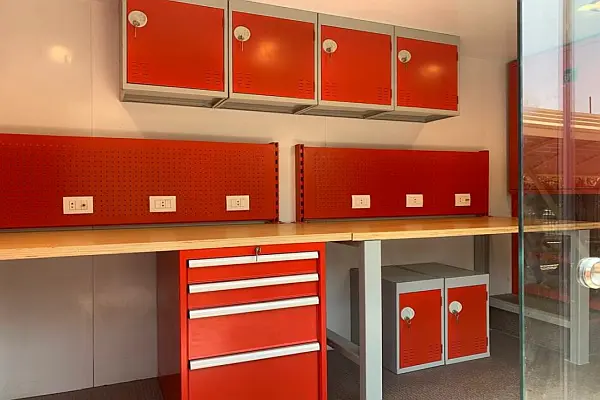
Small-parts storage (drawers / bins / dividers)
Ideal for high-SKU items such as medical supplies, pharmacy back stock, consumables, and accessories. It supports faster, cleaner picking and simpler cycle counts.
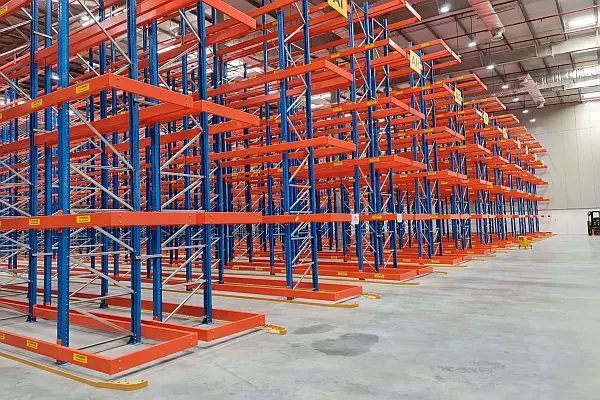
Pallet racking (when pallets dominate your workflow)
If most items arrive and move as pallets, pallet racking becomes the backbone. It can be combined with picking zones (shelving, bins) so fast movers don’t get buried behind bulk stock.
If you want an example of how LinkMisr approaches pharma storage needs, see their sector overview here: pharmaceutical storage solutions.
A practical storage design process (steps you can follow)
Use this process before you buy or change anything. It helps you avoid costly redesigns later.
Step 1: Map your product groups and temperature zones
- Ambient items
- Chilled items
- Controlled / restricted items
- Returns / quarantine / damaged stock zones
Design storage so each zone has clear boundaries, signage, and a simple pick path.
Step 2: Classify SKUs by movement (fast vs slow)
Split your SKUs into fast movers, medium movers, and slow movers. Put fast movers closest to dispatch/picking and at ergonomic heights. Slow movers can go higher or deeper in storage.
Step 3: Decide your picking method
- Case/carton picking: favors shelves, carton flow style zones, and wide labels.
- Piece picking: favors bins, dividers, drawers, and clear location IDs.
- Pallet in / pallet out: favors pallet racking with dedicated staging lanes.
Step 4: Build traceability into the layout
- Assign location codes (aisle/bay/level/bin)
- Keep batch/lot separation rules clear
- Make FEFO picking the default for expiry-sensitive categories
- Design a “verification point” near packing to catch mis-picks
Step 5: Plan cleaning and hygiene routines
- Keep aisles wide enough for cleaning access
- Reduce clutter zones (no random overflow corners)
- Use accessories/dividers to keep items contained
- Maintain clear separation between quarantine and released stock
Step 6: Design for growth (modularity matters)
Pharma operations change: new SKUs, new suppliers, new demand cycles, new compliance requirements. Modular shelving that’s easy to adjust or extend helps you grow without rebuilding the whole warehouse.
قوائم تفتيش صغيرة
Checklist A: On-site walk-through (30–60 minutes)
- Do you have clear ambient vs chilled zoning?
- Where do picking errors happen most?
- Which SKUs cause “overflow” and why?
- Is quarantine physically separated and obvious?
- Are labels readable from the normal working position?
- Are restricted items protected with access control?
- Can staff clean behind/under storage easily?
- Is there a safe workflow for replenishment without blocking picking?
Checklist B: What to include in your RFQ (so suppliers design correctly)
- Facility dimensions + ceiling height + any obstructions
- Temperature zones (ambient/chilled) and operational constraints
- SKU count, carton sizes, and bin/drawer needs
- Picking style (piece/carton/pallet) and daily order volume range
- Load requirements (per shelf level, per bay, per pallet)
- Security needs (restricted zones, lockable sections, controlled aisles)
- Hygiene expectations (cleaning routine, accessibility, spill risk)
- Expansion plan (expected SKU growth in 6–24 months)
Where LinkMisr fits (USP: adaptable systems + scalable layouts)
If you’re looking for a local partner in Egypt to plan and deliver shelving for pharmaceutical use cases, LinkMisr positions its pharma offering around:
- Custom-made storage solutions built around safety, traceability, hygiene, and temperature needs.
- Flexible design layouts for medical centers, hospitals, and pharmacies with many product lines.
- Modular shelving that can be adjusted or extended as SKUs grow.
- Options for ambient or chilled areas depending on product requirements.
- Traditional, mobile, and multi-tier options to balance access, capacity, and control.
You can also start from the main site to explore product categories and services: لينك مصر:.
Conclusion: make storage a control system, not just “shelves”
Pharmaceutical storage shelving works best when it supports your daily controls: clean zoning, FEFO picking, clear labeling, secure access, and a layout that can grow without disruption.
If you want help translating your requirements into a practical layout and system selection, review LinkMisr’s pharma sector page, then move to a quick scoping call.
الخطوة التالية: اتصل بلينك مصر to discuss your facility, SKU profile, and storage zones.
الأسئلة الشائعة
1) What is FEFO and why does it matter for pharma storage?
FEFO means “First Expired, First Out.” It helps reduce expiry losses by making expiry date the main rule for picking, not just arrival date.
2) Can mobile shelving be used for pharmaceutical storage?
Yes—especially when you need higher density and want more control over aisle access. Final selection depends on loads, flooring, and how frequently items are accessed.
3) How do I plan shelving for chilled vs ambient products?
Separate zones with clear boundaries and workflows. Place high-movement chilled items near the entry/exit of the cold area to reduce door-open time and improve picking efficiency.
4) What storage system is best for hospitals and pharmacy backrooms?
Usually a combination: small-parts shelving (bins/dividers/drawers) for daily dispensing items, plus separate bulk shelving/racking for reserve stock.
5) How do I build traceability into my storage layout?
Use location codes, enforce batch/lot rules, label consistently, and design pick paths that reduce mixing risk—especially for look-alike packaging.
6) How do I choose between shelving and pallet racking?
If your operation is mostly pallet movements, racking is essential. If daily work is piece/carton picking across many SKUs, shelving and small-parts systems typically deliver faster access.
7) What information should I prepare before contacting a storage supplier?
Facility size, temperature zones, SKU count and carton sizes, picking style, load requirements, security needs, and your 12–24 month growth plan.