

تخزين مستودعات الأدوية في مصر
في تخزين المستحضرات الصيدلانية، فإن هدفنا ليس “زيادة عدد الرفوف”. بل هو تحقيق سلامة المنتجات، وسرعة الاستلام، والتحقق من التتبع قبل التدقيق، مع الحفاظ على مخاطر صلاحية المنتج والخلط بين المستحضرات إلى أدنى حد ممكن.
يوضح هذا الدليل كيفية تصميم حلول تخزين الأدوية العملية لمستودعات التوزيع في مصر، باستخدام أنظمة الرفوف والأرفف والتقنيات التصميمية التي تتكيف مع الاحتياجات المتغيرة.
جدول المحتويات
- لماذا تختلف عملية تخزين مستودعات الأدوية؟
- المنطقة غير القابلة للتفاوض: المنطقة المفتوحة، المنطقة المبردة، المنطقة الخاصة، المنطقة المقيدة
- أنظمة الرفوف والأرفف المناسبة لتوزيع المستحضرات الدوائية
- كيفية تصميم المنتجات لتتبعها ومراقبة صلاحيتها بعد انتهاء الصلاحية
- عملية تخطيط عملية (خطوة بخطوة)
- قوائم مراجعة شاملة صغيرة (دراسة الموقع + طلب عرض الأسعار)
- أين يندرج دور لينك مصر
- الأسئلة الشائعة
لماذا تختلف عملية تخزين مستودعات الأدوية؟
تتولى مراكز توزيع الأدوية عادةً معالجة مزيج من الكرتون والعلب وأحيانًا الأطقم، وغالباً عبر عدد كبير من المنتجات المختلفة. يجب أن تدعم التخزين ما يلي:
- جودة المنتج: توزيع واضح للحرارة (في الأماكن المفتوحة مقابل الأماكن المبردة) وممرات مناسبة للإدارة المنظمة.
- قابلية التتبع: عرض مجموعة/كمية ومهلة الصلاحية على مستوى الموقع.
- النظافة: طرق ممرات نظيفة، ومناطق منظمة، وعدم وجود متاجر مفرطة.
- الأمن: الوصول المقيد للمواد الخاضعة للرقابة أو ذات القيمة العالية.
- قابلية التوسع: مستودع يتكون من وحدات يمكن توسيعها مع نمو مجموعات المنتجات وإضافة مستودعات.
المنطقة غير القابلة للتفاوض في مستودع الأدوية
قبل اختيار نظام الرفوف، قم بتحديد مناطق التشغيل الخاصة بك. تحتاج معظم مستودعات الأدوية إلى هذه المناطق (حتى لو كانت بعضها صغيرة):
منطقة التخزين المحيطة
منطقة اختيار المخزون الأساسية الخاصة بك ومخزن المخزون الاحتياطي للمنتجات القياسية. غالبًا ما تستفيد هذه المنطقة من مزيج من الرفوف لتخزين العبوات ورفوف التخزين للمواد السائبة.
منطقة مبردة / ذات درجة حرارة معتمدة
التصميم يهدف إلى السرعة والانضباط: يجب أن يقلل التصميم من وقت فتح الباب إلى الحد الأدنى ويضمن بقاء الأشخاص الذين يرفعون الأمتعة على مقربة من المدخل المبرّد لسرعة عملية الاستلام.
منطقة الحجر الصحي/الاحتجاز
منطقة مخصصة بشكل فني لاستلام المنتجات المعيبة أو المشتبه في وجودها فيها تلف، أو المنتجات المعروضة حالياً للتصديق على الجودة أو المنتجات المرتبطة بإجراءات الاسترجاع. يجب أن يكون تخزينها واضحاً بحيث لا يُسمح بأخذها.
منطقة الوصول المقيدة/المراقبة
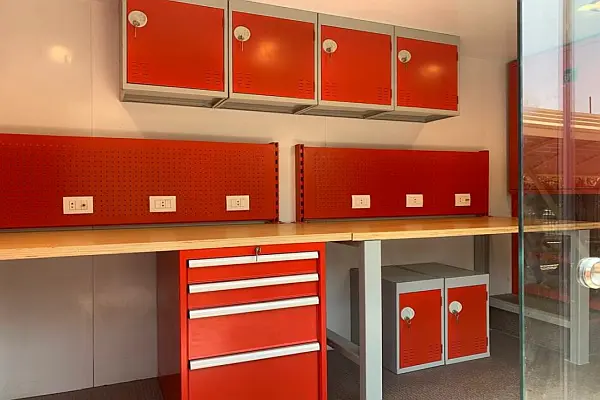
للأدوات التي تتطلب مراقبة الدخول. يمكن لمخزن الأسلحة دعم ذلك باستخدام وحدات قفل، وممرات محكومة، وحدود تصريح واضحة.
أنظمة الرفوف والأرفف المناسبة لتوزيع المستحضرات الدوائية
أفضل أنظمة الرفوف الصيدلانية هي تلك التي تتناسب مع الطريقة التي تقوم بها فعليًا باختيار المستحضرات. تشمل التوافقات الشائعة ما يلي:
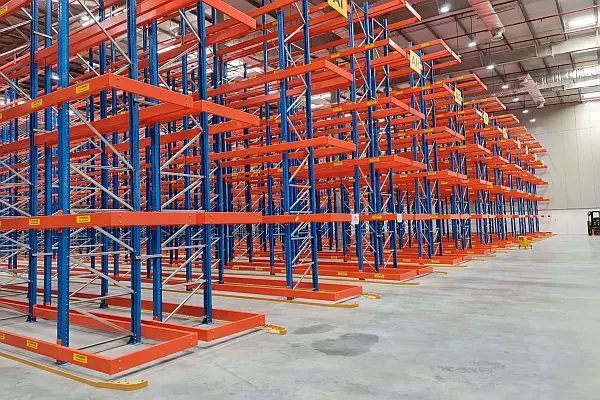
رفوف طويلة القطر لتخزين الحاويات/الأكاسيد
من المفيد عند نقل المنتجات في عبوات الكرتون، ويحتاج فريقك إلى وصول مباشر إليها. يمكنك إضافة مقاعد ومستويات تحديد الموقع لتخفيض خطر التداخل والتعجيل بعمليات حساب الدوران.
رفوف ومساحات تخزين صغيرة للأجزاء الصغيرة لزيادة الكثافة في تخزين المنتجات ذات العدد الكبير من الأصناف
عندما تدعم المستودع فروعًا لشركات الصيدلة أو المستشفيات أو المتاجر التجارية، غالبًا ما توجد به العديد من المنتجات ذات الحجم الأصغر. وتضمن الصناديق والمقسمات والأرفف سرعة عملية الفرز وتنظيمه.
تدفق العبوات (عندما تكون معايير FEFO ضرورية)
يمكن لخطوط نمط التدفق دعم اتجاه التقاط المنتجات بشكل متسق. في الواقع، يساعد ذلك الفرق على اتباع مسار التقاط المنتجات المخطط له، خاصةً عند استخدامه مع قواعد التسمية وإعادة التزويد القوية.
حوامل الأثقال للاحتياطي السائبة
إذا كنت تستلم البلالات وتخزن مخزون احتياطي بكميات كبيرة، تصبح منصات الرفع على البلالات العمود الفقري الخاص بك. وتعتبر الاستراتيجية الشائعة “التخزين الكلي على منصات الرفع، والتوصيل من الرفوف” للسلع السريعة الحركة.
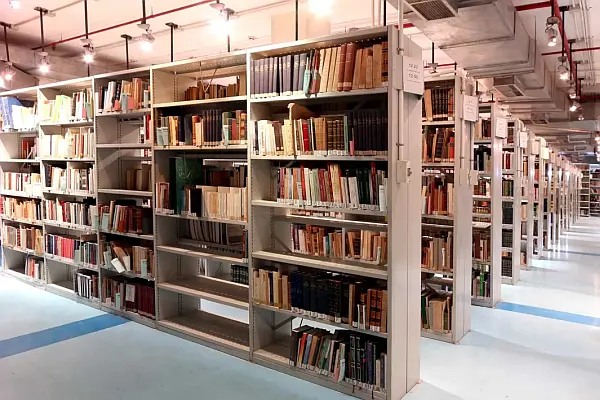
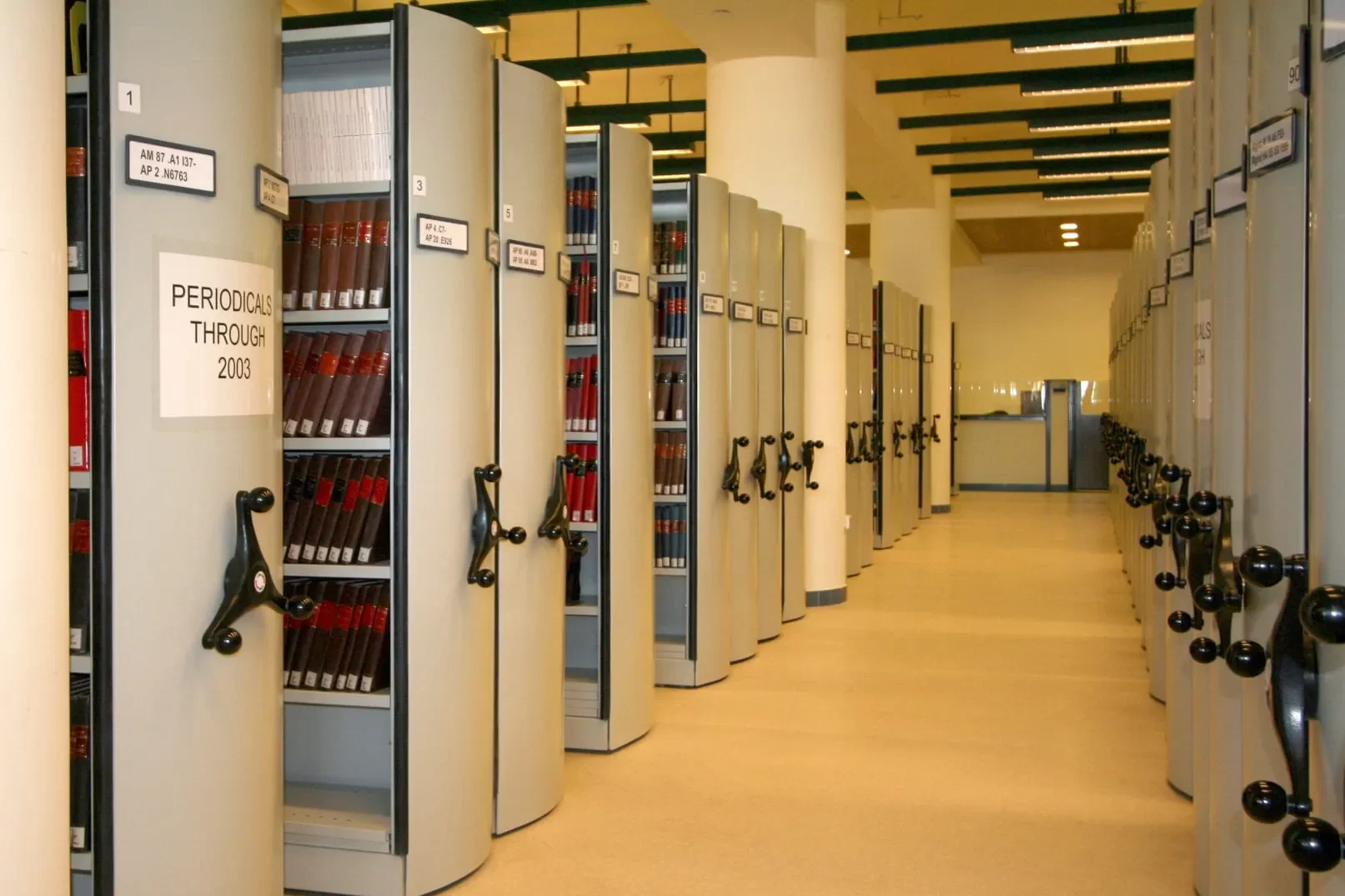
الرفوف المتحركة (عندما يكون هناك ضيق في المساحة)
عندما تكون مساحة الأقدام محدودة، يمكن لنظم التشغيل الجوالة أن تقلل مساحة الممرات وزيادة الكثافة. فهي مفيدة بشكل خاص للمساحات التخزينية المراقبة حيث يمكن التحكم في الوصول من خلال التصميم.
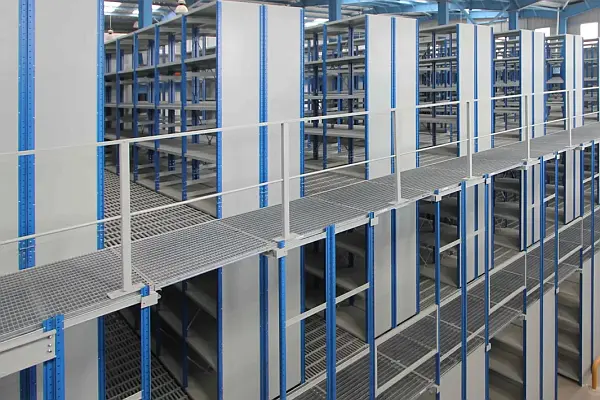
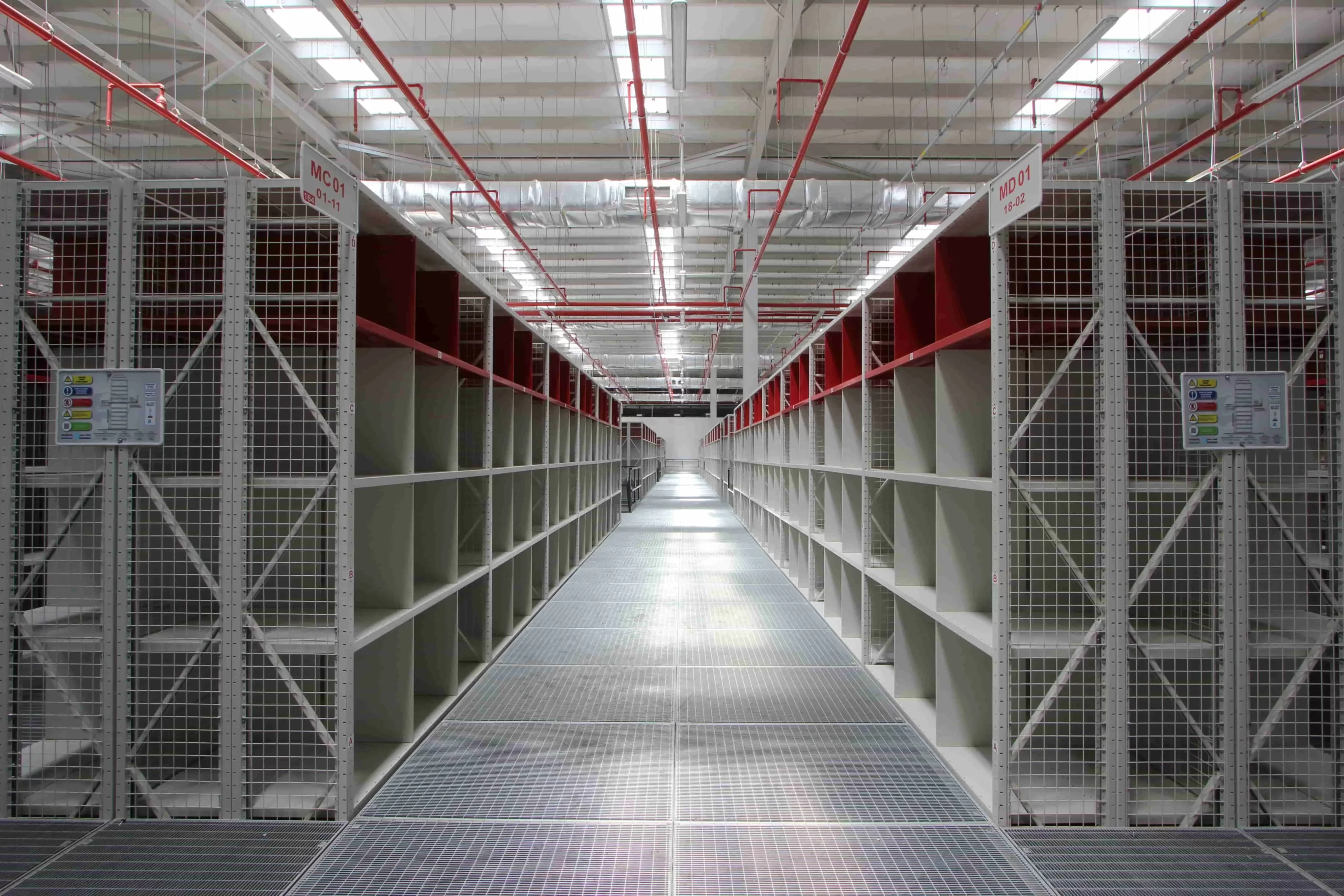
لمعرفة كيفية تعليق LinkMisr لمستودعاته الخاصة بالصيدليات (التقليدية والجوالة ومتعددة المستويات)، يرجى زيارة: تخزين القطاع الدوائي.
كيفية تصميم المنتجات لتتبعها ومراقبة صلاحيتها بعد انتهاء الصلاحية
لا يقتصر التتبع على البرامج فقط. بل إن التصميم المادي الخاص بك يساعد على تطبيق نظام تحديد التخزين النهائي، أو يخرقه بصمت.
القواعد المادية التي تساعد في إنجاح برنامج FEFO
- وجه اختيار واضح: تجنب “العلب المفتوحة المتعددة” الموزعة على مختلف الرفوف لنفس المنتج، ما لم يتم التحكم بها.
- قواعد تحديد الموقع: قواعد الأرصفة / الفتحات / المستويات / المواقع التي تتوافق مع نظام WMS الخاص بك أو عملية إدارة المخزون.
- منطق الانفصال: تحديد الوقت الذي يمكن فيه لمجموعات العمل مشاركة موقع واحد، والوقت الذي لا يمكن فيه ذلك.
- إدارة إعادة التجديد: لا ينبغي لمسارات إعادة التعبئة أن تعرقل عملية الاستلام أو تشجع على استخدام طرق بديلة.
خيارات التصميم البسيطة التي تقلل من الأخطاء
- استخدم ارتفاعات رفوف متسقة وتوزيعات تسميات لضمان قابلية التنبؤ بالمسح الضوئي والتحقق البصري.
- ينبغي أن يكون عبوات المجموعة متشابهة قدر الإمكان (أو يتم إضافة إشارات مرئية على علامة الموقع).
- احتفظ بـ “نقطة التحقق” الصغيرة بالقرب من العبوات لتحديد الأخطاء قبل الشحن.
عملية تخطيط عملية (خطوة بخطوة)
الخطوة 1: قم بتسجيل مخزونك (وليس فقط عدد أرقام المنتجات)
- المتجهون بسرعة / بسرعة متوسطة / بسرعة بطيئة
- أحجام وتراخيص الكرتون
- نسبة التبريد مقابل البيئة
- حساسية انتهاء الصلاحية (كم مرة تهم فإوفو)
- وحدة التخزين: منصة خشبية، كرتون، صندوق، قطعة
الخطوة الثانية: تحديد مكان عملية التعبئة
تُظهر العديد من المستودعات أداءً أفضل مع منطقة تفريغ مخصصة تبقى نظيفة من الناحية التصميمية، بينما يعيش المخزون الاحتياطي في مستودعات كبيرة. وهذا يحافظ على السرعة والدقة مع نمو حجم المخزون.
الخطوة الثالثة: إنشاء المناطق والمسارات
- الوصول → عمليات فحص الجودة/الاستلام → التخزين
- مسارات التجديد التي تتجنب عبور مسارات التوصيل الرئيسية
- التعبئة → التغليف → التخزين → الشحن
الخطوة 4: اختر الأنظمة حسب المنطقة
- التخزين بالجملة: الرفوف على شكل ألواح خشبية عند الاقتضاء
- اختيار الأشكال: رفوف / أدراج / مسارات تدفق حسب ملف تعريف SKU
- محدود: تخطيطات التخزين القابلة للتعقيم أو التحكم في الوصول
- Chilled: أنظمة متوافقة مع سير عمل غرفة التبريد الخاصة بك
الخطوة الخامسة: ابق النمو واقعيًا
يتميل توزيع المستحضرات الصيدلانية إلى التوسع في عدد الوحدات، والكمية، وأحيانًا في عدد المخازن. يُفضل استخدام أنظمة الرفوف القابلة للتعديل والتوسيع وإعادة التكوين دون إعادة بناء المنشأة بأكملها.
قوائم تفتيش صغيرة
الائتمان A: أسئلة المسح الموقعي لمدة 30 دقيقة
- أين تحدث أخطاء الفرز غالبًا؟
- أي SKUات تسبب حدوث فراغ—ولماذا؟
- هل يتم اختيار المنتجات المبردة بسرعة مع الحد الأدنى من وقت فتح الباب؟
- هل يتم فصل الأشخاص في الحجر الصحي جسدياً وتحديد مكانهم بوضوح؟
- هل لديك تخزين محدود آمن من حيث التصميم؟
- هل يمكن لفريق التنظيف الوصول إلى خلف/تحت مناطق التخزين؟
المرشح B: ما يجب تضمينه في طلبك للأسعار (RFQ)
- أبعاد المستودع، الارتفاع الصافي، العوائق
- مناطق درجة الحرارة والقيود التشغيلية
- ملف SKU + أحجام الكرتون + متطلبات التحميل
- طريقة التعبئة (علبة / كرتون / حقيبة / قطعة) وأنماط الطلبات
- نهج التتبع (ترميز الموقع، قواعد فصل الدوائر)
- المتطلبات الأمنية (الفئات المقيدة، سياسة الوصول)
- توقعات التوسع (خلال 12-24 شهراً القادمة)
أين يندرج دور لينك مصر
تُقدم LinkMisr حلول تخزين الأدوية من خلال توفير أنظمة وتصاميم قابلة للتعديل يمكن تكييفها وفقًا لتوزيع درجات الحرارة وتوقعات النظافة ومجموعة واسعة من المنتجات عالية القيمة، بالإضافة إلى الاحتياجات المتعلقة بالوصول الممنوح. ابدأ هنا:
- الصفحة الرئيسية (موجز للمنتجات والخدمات)
- صفحة قطاع الصناعات الدوائية (نهج التخزين المخصص للقطاع)
الخاتمة + CTA
يعمل مستودع الأدوية بشكل أفضل عندما يتم تصميم التخزين كجهاز مراقبة: مناطق واضحة، مسارات تفريغ متوقعة، ووسائل تسمية قوية، وممارسة سياسة "FEFO"، وقدرة متكاملة تتطور مع نمو أعمالك.
الخطوة التالية: إذا كنت ترغب في الحصول على توصية بتصميم لوحة العرض بناءً على ملف تعريف SKU الخاص بك واحتياجات درجة الحرارة ومحدودية المساحة،, اتصل بـ LinkMisr.
الأسئلة الشائعة
ما معنى FEFO في تخزين المستحضرات الصيدلانية؟
تعني عبارة FEFO “الأول الذي ينتهي الصلاحية، أول من يتم التخلص منه”. وتُعطي الأولوية لتخزين العناصر التي تتوافر بها أحدث تاريخ انتهاء الصلاحية، وذلك لتقليل الخسائر ومخاطر انتهاء الصلاحية.
هل ينبغي على موزع الأدوية استخدام رفوف التخزين أو ألواح التخزين؟
تستخدم معظم العمليات كليهما: الرفوف لتخزين المخزون السائل، والأرفف/الأدراج/المنصات لتخزين المنتجات الجاهزة للبيع. يعتمد التوازن المناسب على كيفية انتقال المخزون وتكوين الطلبات.
كيف يمكنك تخزين الأدوية المبردة بشكل فعال؟
تصميم يوفر الحد الأدنى من وقت فتح الأبواب، ويسمح بتحديد المناطق بوضوح، ويضمن سهولة الوصول للمستأجرين ذوي الأولوية العالية. يجب أن يتوافق تخطيط الرفوف مع سير العمل في غرفة التبريد الخاصة بك.
كيف يمكنك منع الالتباس مع عبوات متشابهة الشكل؟
استخدم قواعد الفصل، ووضع العلامات القوية على المواقع، وتحديد مواضع الاستلام بشكل متوقع. ضع في الاعتبار المؤشرات البصرية والتحقق من صحة المعلومات بالقرب من عملية التعبئة والتغليف.
ما هو أعمـل خطأ شائع في تخطيط تخزين المستحضرات الصيدلانية؟
دمج إجراءات الحجر الصحي/الاسترداد مع المخزون المتاح، وبناء تخطيطات تجبر على اتخاذ “مسارات مختصرة” تضعف عملية تتبع المنتجات والامتثال لمعايير "الفريق الفني المعني بالسلامة".