Food Beverage Warehouse Storage Solutions

Food & Beverage Warehouse Storage Solutions
Why food and drink storage is different
Food and beverage warehouses are judged by more than capacity. You need high turnover handling, strict hygiene routines, temperature control, and batch traceability that stands up to audits. When storage layout is not built for this reality, teams lose time, stock rotation slips, and product integrity becomes harder to defend.
The most common storage challenges in food and drink operations
Most issues come from trying to run mixed temperature and mixed packaging profiles inside a layout that was designed for general goods. In practice, the sector needs storage that supports clear zoning, consistent rotation, and fast replenishment without compromising cleanliness.
Space pressure without losing access speed
Maximizing space is important, but density only helps if you can still pick and replenish quickly. If fast movers get blocked behind slow movers, dispatch slows down and labor cost rises.
Multiple storage temperatures in one supply chain
Food and drink often moves between ambient, chilled, and frozen areas. Storage systems must perform reliably across harsh conditions, including condensation risks and low temperatures that can damage standard finishes over time.
Traceability and batch control
Batch tracking depends on structured locations, predictable flow, and disciplined rotation methods such as FIFO and FEFO. Storage should make the correct behavior easy for operators, not dependent on memory.
Hygiene and cleanability
Racking and shelving must support routine washdown, reduce dust traps, and keep products off the floor. Practical details like clear aisle rules, impact protection, and easy-to-read load signage also reduce contamination and damage risk.
Storage systems that fit food and beverage workflows
Adjustable pallet racking for packaged food and drink
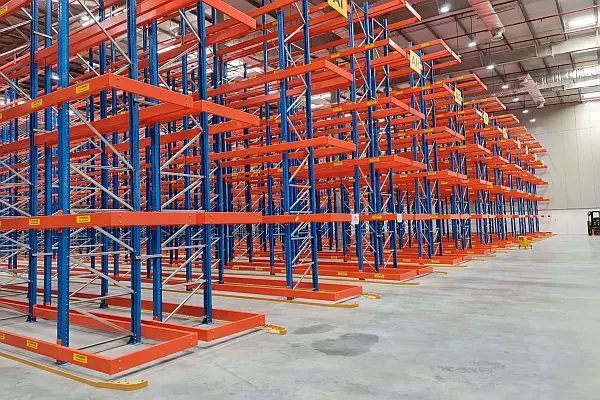
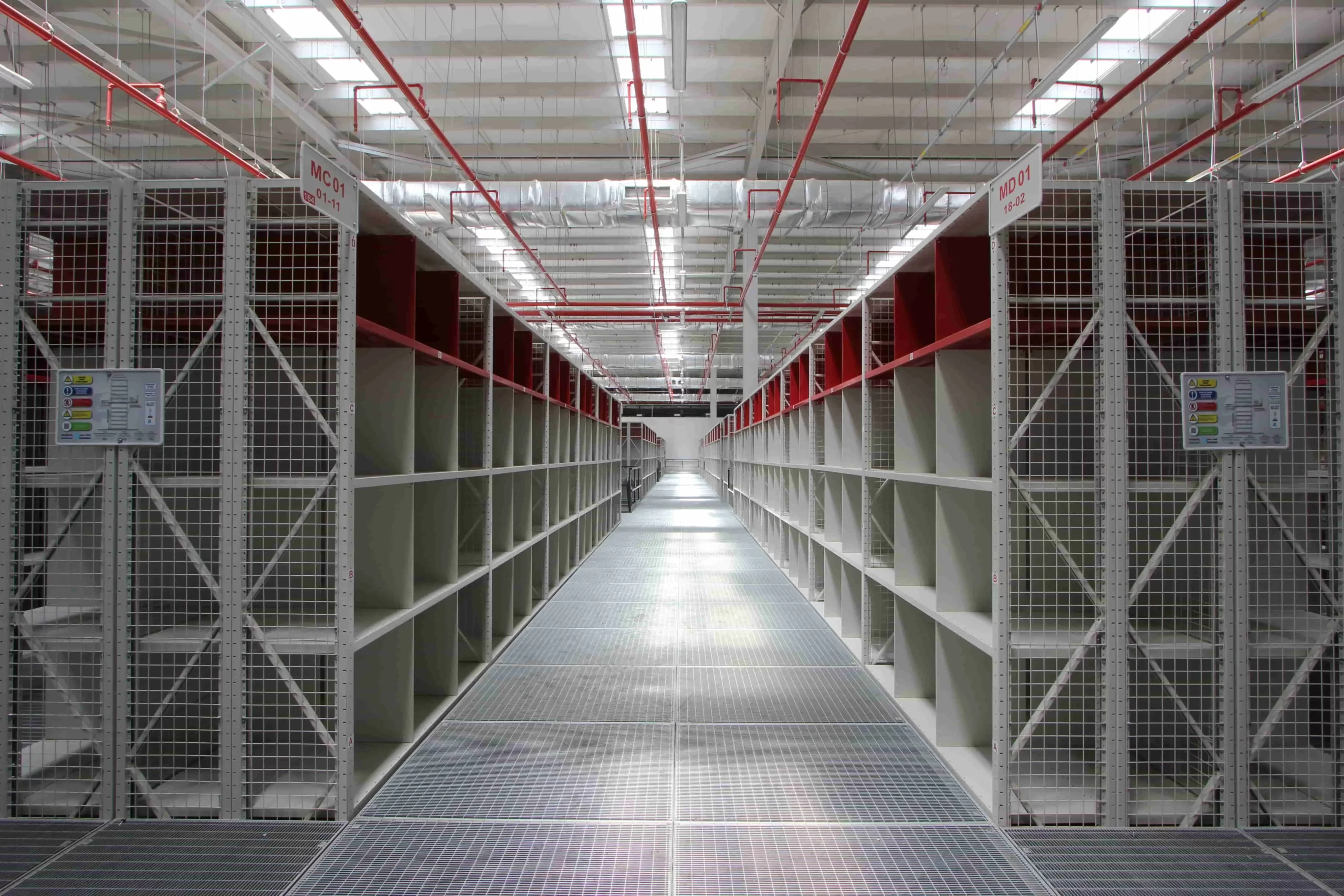
Even in modern facilities, adjustable pallet racking remains the most common pallet storage method because it fits a wide range of SKUs and can be configured to your layout. It also keeps direct access to every pallet position, which is critical for mixed inventory and frequent picking.
LinkMisr designs adjustable racking that can be tailored to your pallet size, handling equipment, aisle widths, and throughput targets. Key capabilities typically include beam height adjustment in 50mm steps, heights up to 30m, variable depths and widths, and operating temperatures from -30°C to +40°C.
High density cold-store storage when space is expensive
Cold storage is costly per square meter because you pay to chill the entire volume. High density solutions reduce the chilled footprint needed for the same number of pallets, which can cut running costs while improving organization.
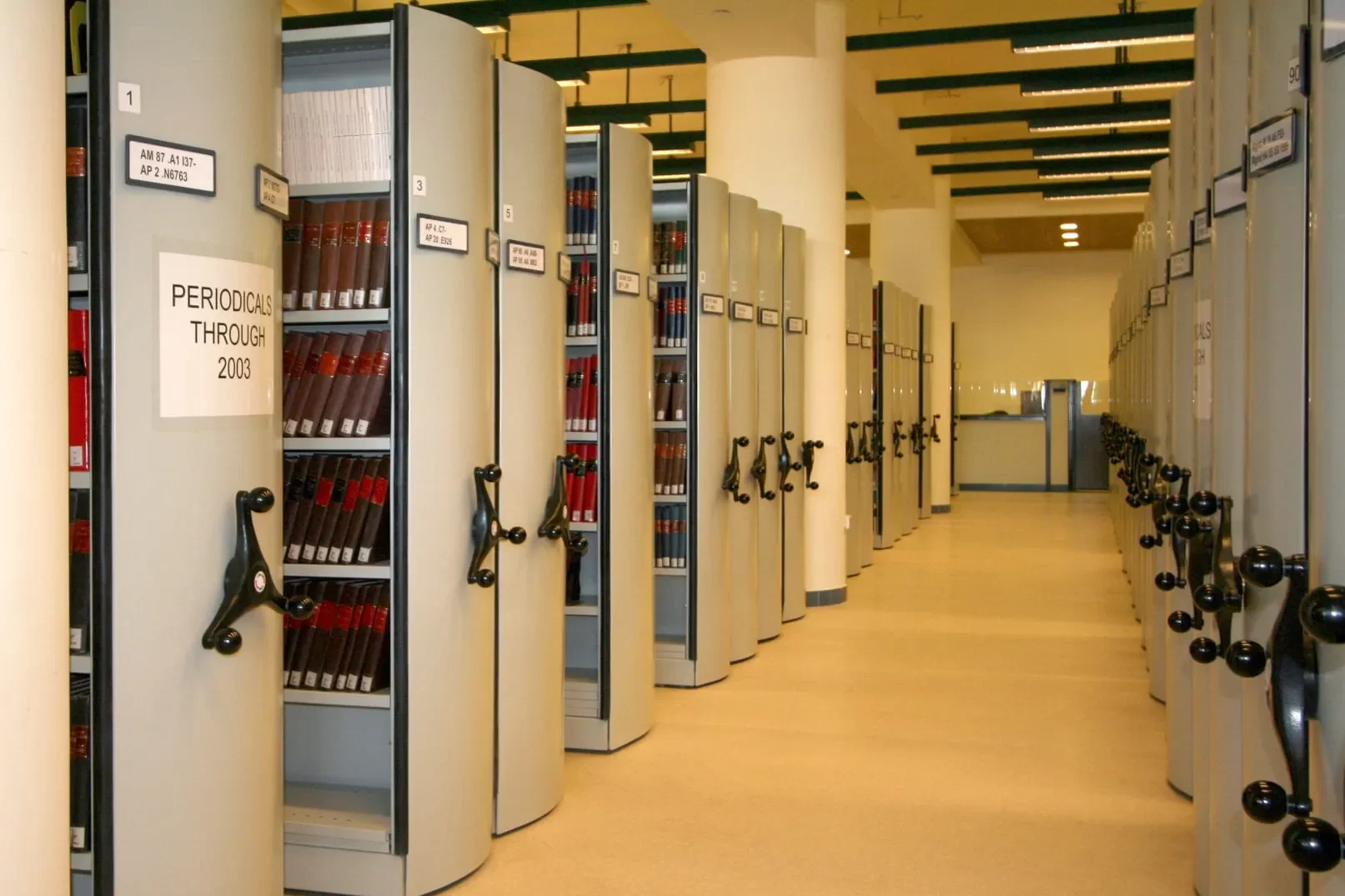
Depending on whether you need FIFO, FILO, or a mix, options can include Mobile Pallet Racking, Drive-In, and semi-automated shuttle-style systems. Galvanized finishes are often preferred in cold and condensation-prone environments because they help prevent rusting.
Flow storage for high turnover and reliable FIFO
For fast-moving lines, flow systems support automatic rotation. Pallet Flow or Carton Flow can deliver FIFO with a simple load aisle and retrieval aisle approach, helping maintain freshness and batch discipline.
What a tailored design from LinkMisr typically includes
Food and beverage storage works best when the system is planned around movement, not only around capacity. A tailored approach typically reviews SKU profile, temperature zones, picking method, growth plan, and hygiene requirements, then produces a layout that supports predictable replenishment and dispatch.
Operational details that improve daily performance
Clear zoning, consistent labeling, defined staging, and protected rack ends reduce damage and confusion. These details are also what make onboarding easier for new staff during peak periods.
FAQ
What is the best racking for mixed food and beverage SKUs?
Adjustable pallet racking is usually the first choice because it keeps direct access to every pallet and can be configured for different pallet sizes and turnover rates.
How do you prevent rust in cold stores?
Cold rooms often face condensation. Using galvanized finishes and specifying components designed for low temperatures helps reduce corrosion risk and extends service life.
Should food warehouses use FIFO or FEFO?
FIFO is common for batch control, while FEFO is often preferred when expiration date is the deciding factor. The right choice depends on product type and your quality process.
How can storage improve traceability?
Defined locations, clear labels, controlled staging, and rotation-friendly storage methods make it easier to track batches and reduce errors during picking and replenishment.
What temperature range should racking handle for food operations?
Many food facilities need systems that perform from frozen to ambient conditions, commonly from -30°C up to +40°C depending on the area.
How do you increase capacity without slowing picking?
Combine better slotting with the right density choice. Keep fast movers accessible, protect replenishment paths, and avoid designs that bury high-turn items behind slow stock.
Request a tailored food and beverage storage solution
If you want higher capacity, cleaner operations, and faster picking without losing batch control, LinkMisr can design a food and drink storage system around your temperature zones, turnover rates, and hygiene standards.